Meet Nataliia Belichenko
Lessons for students who need clear structure, patient guidance and a deeper understanding of music. Nataliia teaches children, teens and adults in Vernon and online.
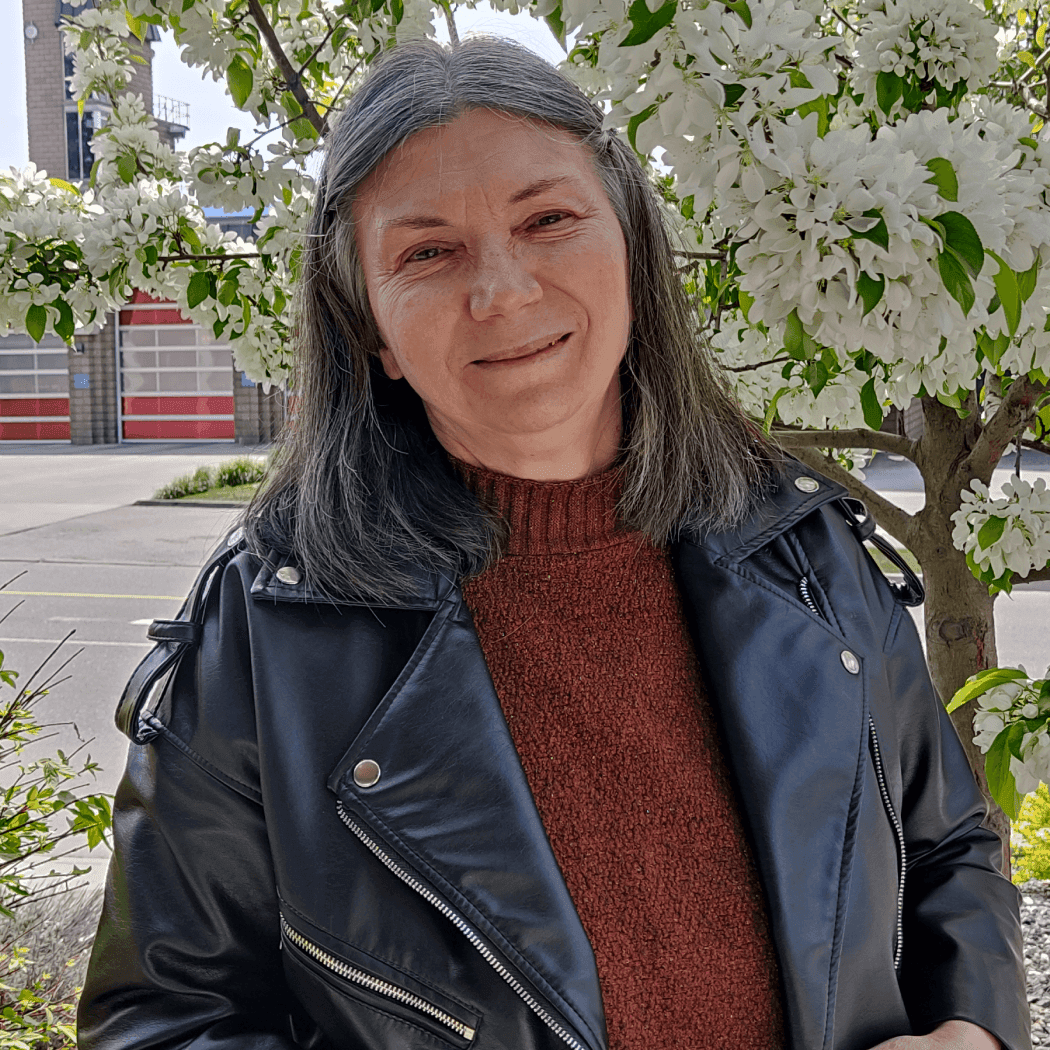
A Clear Way to Understand Music
I teach Piano and the full range of RCM theory - RCM, ARCT, LRCM Harmony, Analysis, Aural Skills, Counterpoint and Compositional Techniques. I like lessons to feel calm, clear and useful. A student should leave the lesson understanding what we worked on and what to practice next. My background is in academic Music Theory, Harmony, 16th- and 18th-century Counterpoint, Ear Training and Musical Analysis. I spent many years teaching these subjects at university level, and now I use that experience in private lessons with students of all ages. For me, music lessons are not only about playing the right notes. I want students to understand how music works, listen more carefully and build confidence step by step.
Piano Lessons
First Steps at the Piano
I help students start with reading, rhythm, hand position and simple practice habits.
Building Stronger Skills
For students who already play and need clearer structure, better technique and steady progress.
Theory and Ear Training
Understanding How Music Works
I help students understand the hidden inner structure of music - the foundation on which it is built.
Ear Training and Sight Singing
Students learn to hear more clearly, recognize patterns and connect sound with notation.
RCM Exam Preparation
Focused Theory Preparation
For students who need structured help with RCM Theory at all Levels.
Deeper Musical Foundation
For students preparing for the RCM Level 9 Harmony exam, building skills in harmonic language, two- and four-part writing, melody writing and decoration, chorale harmonization, and musical analysis.
Expanding Harmony and Counterpoint
For students preparing for the RCM Level 10 Harmony & Counterpoint exam, with focused study of chord vocabulary, sequences, melody writing, counterpoint, chorale harmonization, and musical form.
Advanced Harmonic and Contrapuntal Writing
For students preparing for the ARCT Harmony & Counterpoint exam, with focused study of chromatic harmony, modulation, figured bass, chorale harmonization, and 18th-century contrapuntal writing.
Uncovering Musical Structure
For students preparing for the ARCT Analysis exam, learning to analyze fugues, Classical forms, 19th-century art songs, and post-1900 music.
Listening, Identifying, and Transcribing
For students preparing for the LRCM Aural Skills exam, developing skills in chord identification, harmonic, melodic, and rhythmic dictation, and the transcription of tonal and non-tonal material.
From Renaissance Species to Baroque Fugue
For students preparing for the LRCM Counterpoint exam, practicing species counterpoint, Renaissance-style vocal writing, and Baroque fugue and instrumental writing.
Writing in Classical and Romantic Styles
For students preparing for the LRCM Classical and Romantic Compositional Techniques exam, working on Classical sonata or rondo movements, Romantic transitions and art songs, and analysis of their compositions.
Understanding and Creating with Modern Techniques
For students preparing for the LRCM 20th- and 21st-century Techniques exam, studying and applying modern musical approaches through score analysis and short compositional exercises.
Deep Experience in Music Theory
For many years, my academic work has been centered on Music Theory, Harmony, Counterpoint, Ear Training and Musical Analysis. This background helps me teach music as a clear system, not just as separate pieces or exercises.
I am firmly convinced that a thorough study of harmony and counterpoint is essential for every musician. Above all, it helps musicians understand the music they perform more deeply and reconstruct its underlying structure.
In my view, RCM exam preparation, as it is commonly approached, often amounts to a brief and superficial review of the relevant textbook and examination papers, with one goal: to train students to achieve the desired exam score. Once they reach that goal, students quickly forget what they have studied before - and that is understandable. No one can fully master an entire course in just three months, especially when counterpoint, as a separate discipline, is covered in only the final one or two lessons. For this reason, each course in Harmony and Counterpoint should be studied from six to nine months - roughly the length of a full academic year.
Students need time to develop their aural skills so they can clearly hear in their minds what they are writing in musical notation. They need time to learn to play harmonic progressions, sequences, and modulating preludes, so they can remember how these new musical structures sound. Through regular listening and playing practice, students learn to hear the patterns internally and recognize them in the music they analyze and perform. Developing these skills takes time and calls for sustained effort from both the student and the teacher, since each student has a different level of preparation and musical ability.
That is why a thorough study of harmony requires time, regular individual lessons, and dedicated practice at home.
I draw on my experience and knowledge to support students as they prepare for RCM exams, while also helping them grow as musicians and develop creative skills that shape their harmonic and contrapuntal thinking.
Professional Journey
2024 to PresentPrivate Lessons in Vernon and Online
Private Lessons in Vernon and Online
I teach Piano, Ear Training, and RCM Theory at all levels, including Harmony, Analysis, Aural Skills, Counterpoint and Compositional Techniques. My work now focuses on private lessons for students who need clear structure, steady progress and careful guidance.
2022 to 2024Private Music Studio in Poland
Private Music Studio in Poland
My husband and I created a private music school for the church community in Legnica, Poland. I taught Piano, Theory and Ear Training, worked with children and teens, supported choir, solo and ensemble work.
2000 to 2023Associate Professor of Music Theory
Associate Professor of Music Theory
From 2000 to 2023, I was an Associate Professor in the Department of Music Theory at Kharkiv I. P. Kotlyarevsky National University of Arts in Ukraine. In 2005, I was awarded the academic title of Docent. I taught Harmony, Counterpoint and History of Counterpoint, Aural Skills and Analysis.
2000 to 2023Student Research and Thesis Supervision
Student Research and Thesis Supervision
I supervised bachelor’s, master’s and PhD research work, including student articles, diploma projects and dissertations in musical art.
2016 to 2023Music Theory Competition Work
Music Theory Competition Work
I worked with the T. S. Kravtsov All-Ukrainian Music Theory Competition as a scientific supervisor, organizer and jury member.
1994 to 2023Teaching Materials
Teaching Materials
I developed practical teaching materials in Aural Skills, Harmony, Counterpoint and Analysis, including exercises in Ear Training, Sight Singing, 16th- and 18th-century Counterpoint, as well as materials for Harmonic Analysis.
Teaching Approach
I keep lessons clear, steady and practical. My goal is to help them understand what they are learning and how to use it in real music.
Theory Made Practical
I use my background in Harmony, Aural Skills, Counterpoint and Musical Analysis to explain music in a way students can actually understand. Theory is not separate from playing. It helps students read better, listen better and practice with more purpose.
Lessons Built Around the Student
Every student needs a different pace. Some need a calm first step, some need stronger practice habits, and some need focused support for theory or exams. I adjust the lesson structure to the student’s age, level and goals.
Academic Work & Professional Links
MEMBERSHIP (1)
British Columbia Registered Music Teachers’ Association
Member of the British Columbia Registered Music Teachers’ Association, supporting professional standards in private music teaching.
TEACHER PROFILE (1)
Royal Conservatory of Music Profile
Teacher profile connected with piano, theory and harmony lessons in Vernon.
ACADEMIC PROFILE (2)
ORCID Researcher Profile
Researcher identity profile for Nataliia Belichenko’s academic work and publication record.
Google Scholar Profile
Publication and citation profile for academic work in music theory, polyphony and musical analysis.
UNIVERSITY PROFILE (1)
Kharkiv University Music Theory Department
Academic department profile connected with university-level teaching in harmony, counterpoint, solfege and musical analysis.
SELECTED TEACHING MATERIALS (2)
Tasks from Ear Training and Harmony
Teaching material with exercises for ear training, harmonic analysis, dictation, harmonization and piano practice.
Practical Advice for Writing a Four-Part Fugue
Teaching material with practical recommendations for students working with counterpoint and fugue writing.
SELECTED PUBLICATION (7)
Tectonic Techniques of Polyphony in Terms of General Musical Universals
Research article on polyphonic thinking, musical universals and structural principles of polyphony.
Frescobaldi’s 'Fiori musicali' – Bach’s 'Clavier-übung III': fughetta – ricercar
The following article is dedicated to observing fughetta's genre in J.S. Bach’s works in the context of a composition-style system of his outstanding Italian predecessor.
J. S. Bach’s Magnificat in Es-dur, Bwv243a: dialogue with tradition
The goal of this article is limited to defining the boundaries and principles of interaction between the "traditional" and the "new" – at the semantic and structural and compositional levels – in the Bach’s Magnificat BWV243a.
J.S. Bach's chorale fughettas: genre-historical context
The goal of this article is to consider a steady genre specificity of fughetta, its autonomy, and independence from fugue, in its historical context-as a typical variety of organ chorale arrangement.
J.S. Bach's chorale fughettas in the variierte - fugierte chorale system
The goal of this article is to study chorale fughettas in J.S. Bach’s organ works as a genre which struck its roots deep into Bach's contemporary composing and performing practice and which has all the typical features of the German chorale arrangements of the XVIII century.
Specificity of Rachmaninov's polyphonic thinking through the prism of his liturgical cycles
V. Manfredini’s Treatise in the Paradigm of Modern Theory of Polyphony
Research on historical music theory, counterpoint, fugue and the development of theoretical music education.
Selected PhD dissertations and master’s theses supervised by me (6)
Fedorak D.V. Musical Works of Hildegard of Bingen in the Genre and Stylistic Aspect
Dissertation submitted for the degree of Candidate of Art Studies (Doctor of Philosophy) in Musical Art (specialty 17.00.03). I. P. Kotlyarevsky Kharkiv National University of Arts, Kharkiv, 2021.
Kharakoz H. V. Choral Fugue: Genre, Stylistic and Performance Aspects (on the material of the Western European music of the XVIII-XIX centuries)
Dissertation submitted for the degree of Doctor of Philosophy (PhD) in specialty 025, “Musical Art” (field of knowledge 02, “Culture and Arts”). Kharkiv I. P. Kotlyarevsky National University of Arts, Ministry of Culture and Information Policy of Ukraine, Kharkiv, 2021.
Pivtoratska L. Reproduction of the Poetics of the «Psalms of David» by T. Shevchenko in the works of Ukrainian composers of XX-XXI centuries.
Dissertation for the degree of Doctor of Philosophy (PhD) in specialty 025, “Musical Art” (field of knowledge 02, “Culture and Arts”). Kharkiv I. P. Kotlyarevsky National University of Arts, Ministry of Culture and Information Policy of Ukraine, Kharkiv, 2023.
Abebe, O. M. A Comparative Analysis of Editorial and Performance Versions of Domenico Scarlatti’s Keyboard Sonatas (K. 27, K. 54, K. 380, and K. 544).
Master’s thesis / I. P. Kotlyarevsky Kharkiv National University of Arts, Kharkiv, 2020.
Chikalova, O. Yu. The Poetics of the Psalm Genre in the Sacred Works of Felix Mendelssohn Bartholdy.
Master’s thesis / I. P. Kotlyarevsky Kharkiv National University of Arts, Kharkiv, 2023.
Yemelianenko, M. R. An Improvisation Course within the System of Professional Music Education.
Master’s thesis / I. P. Kotlyarevsky Kharkiv National University of Arts, Kharkiv, 2022.
What I Work On With Students
These are the main areas I bring into lessons, depending on the student’s age, level and goals.
Piano Foundations
Reading notes, rhythm, hand position, sound, simple pieces and steady practice habits for beginners and continuing students.
Theory and Harmony
Keys, intervals, chords, voice leading and the musical logic behind the pieces students play or study.
Ear Training and Sight Singing
Listening, singing, dictation and connecting what students hear with what they see on the page.
Counterpoint and Analysis
Polyphony, musical form, structure and deeper score understanding for students who need more advanced work.
Questions About Lessons with Nataliia
Study Piano or RCM Music Theory with Me
Tell me what you would like to study, your current level and your goals. I will help you choose a lesson format that makes sense.